
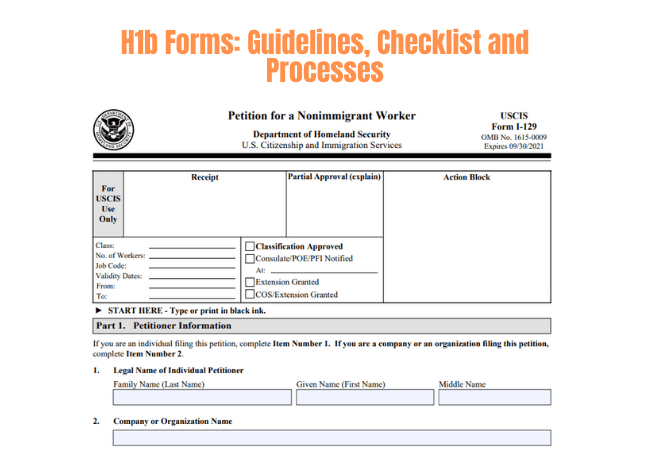
What is an H1B Non Immigrant Visa?

If you are wondering what an H1B non immigrant visa is, you may be a little confused as to what the requirements for applying are and how to apply. There are three main areas to consider when you are looking to apply for an H1B: the application process, the requirements for obtaining an H1B, and the tax residency of the alien individual.
Application process
H-1B non immigrant visas allow foreign nationals to work in the U.S. They are also a route to a green card. However, they come with a catch: they have to return to their home country when the validity period of the visa ends.
The process of applying for a nonimmigrant visa is competitive. This is because the number of visas is limited. A cap-exempt employer, such as a government research organization or a higher education institution, is exempt from the cap.
When applying for a nonimmigrant visa, you need to register online with the United States Citizenship and Immigration Services (USCIS). You will need to create an account, and you will be required to pay a registration fee.
Once registered, you will be able to see the status of your application in your USCIS account. If your application is approved, you will be issued an I-797 form. In addition to your application, you may be asked to provide additional evidence. These documents will likely add a few weeks to the process.
In addition to the aforementioned forms, you will need to submit a digital photo. You can use a scanner to do this. Make sure the photo meets certain criteria.
To qualify for an H-1B non immigrant visa, you must have a bachelor’s degree, or an advanced degree, from a United States educational institution. Applicants should also bring copies of their birth certificates, as well as the birth certificates of any dependents.
After you’ve completed the application, you must find a job. During the application process, your employer will need to certify that there are no labor problems in the occupation, and that the job will not cause a substantial reduction in wages for U.S. citizens.
Requirements
The H1B nonimmigrant visa is one of the most popular ways for foreign nationals to work in the United States. It is also one of the most competitive. Currently, the US issues about 65,000 H-1B visas each year. However, this number is limited due to high demand.
The H1B nonimmigrant visa allows foreign workers to come to the United States to take up a position in a specialty occupation. These types of jobs include architecture, mathematics, computer science, engineering, journalism, medicine, and science. They require specialized knowledge and theoretical expertise.
In order to obtain a visa, a foreign worker must first have a bachelor’s degree or higher. He or she must also have a state license.
If a foreign worker is selected, he or she must receive a salary and have the option to live in the United States. The employer must also submit a Labor Condition Application to the Department of Labor. This is not the same as a labor certification, and it is designed to ensure that the wage offered to the nonimmigrant worker meets or exceeds the prevailing wage.
Depending on the nature of the job, the H1B visa can be extended for up to six years. During this time, the worker must reside outside of the United States for at least one year.
Those who are selected for a H-1B visa are required to pay a non-refundable application fee. Alternatively, they may apply for a green card. When applying for a green card, the foreign worker must demonstrate a willingness to earn in the U.S. Upon approval, he or she will be given a visa stamp.
H1B visas are issued by the United States Citizenship and Immigration Services. Applicants must fill out a Form DS-160. This takes about 90 minutes and requires the submission of receipts for application fees. After completing the application, a foreign worker must apply for consular processing in his or her home country.
Tax residency of alien individuals
An individual who is present in the United States on a non-immigrant visa and is not a citizen of the United States is considered an alien. The individual’s tax residency determines the way the tax system is applied to him or her.
The Internal Revenue Service (IRS) defines three types of aliens. These are foreign students, foreign workers, and foreign researchers. There are also two different tests for determining whether an individual is a resident or nonresident alien.
The first test is known as the “Substantial Presence Test”. A nonresident alien must have a physical presence in the U.S. for 183 days during a three-year period. If an alien does not meet the Substantial Presence Test, he or she is not a resident for tax purposes.
A lawful permanent resident (LPR) is a person who has been issued a green card by the U.S. Citizenship and Immigration Services (USCIS). People with green cards are permitted to live and work in the U.S. on a permanent basis.
Typically, people who have green cards can stay for at least two years in the U.S. and are not allowed to leave the country for more than one year. However, once a person becomes a resident, his or her social security and Medicare taxes are no longer exempt.
The second test is the “Green Card Test.” To be a lawful permanent resident, an alien must have a green card. If a person has a green card, the individual is taxed like a U.S. citizen. It is important to know how to pass the Green Card Test before obtaining a green card.
Limitations
H-1B non-immigrant visas allow foreign workers to enter the United States to work. However, the visa has several limitations. If you are an employer or employee looking to hire a foreign worker, you must understand these limitations before you apply for an H-1B.
The program allows up to 65,000 foreign workers to enter the U.S. each fiscal year. Unlike other visa types, there is a cap on the number of H-1B non-immigrant visas that can be issued. This cap is in place to prevent the use of the visa for speculative employment.
Speculative employment is employment that is not intended for long-term employment or for the creation of new positions. In addition, the use of H-1B for speculative employment undermines the goal of the H-1B program, which is to protect the working conditions and wages of U.S. employees.
The United States Department of Homeland Security (DHS) has been working to reform the H-1B non-immigrant visa program to strengthen its integrity. Currently, the department is aligning the regulations with the statutory definition of the program.
Some of the changes include clarifying the definition of specialty occupations and the definition of the “employer-employee” relationship. These changes are designed to reduce the number of Requests for Evidence (RFEs) and ensure that only qualified petitioners can hire H-1B workers.
Another change is the annual numerical limit of visas. The current numerical limit is 65,000 per fiscal year. 20,000 additional visas are available for aliens with a master’s or higher degree.
Another restriction of the H-1B non-immigrant program is that employers are required to attest that hiring the H-1B worker will not negatively affect the wages of the other workers. This process is known as the Labor Condition Application or LCA.
COVID-19 pandemic as reminder that H-1B workers can be critical in responding to national emergencies
As the COVID-19 pandemic continues to rage, employers are taking measures to keep their workforce safe. Some of these steps include making medical exams and screenings required by law.
The American with Disabilities Act (ADA) also provides employers with a list of what they can and cannot do to protect their workforce. This includes making medical inquiries, conducting medical exams, and providing reasonable accommodations.
Aside from ADA compliance, employers are subject to other federal and state employment discrimination laws. For example, Title VII prohibits gender and sex-based discrimination. In addition, it prohibits discrimination based on race and other protected characteristics.
Another important ADA mandate is that employers must maintain accurate and up-to-date medical records. These records may contain information about health conditions that increase the risk of contracting the pandemic.
While it is unlikely that a COVID-19 outbreak will occur in your workplace, it is a good idea to keep up-to-date on emerging symptoms. Getting the best advice from reputable sources is a good place to start.
As new information becomes available, it is possible that the CDC and other public health authorities will update their recommendations regarding testing, vaccination, and other measures to combat the disease. It is also possible that the FDA may revise their guidance on emergency use authorizations.
One of the biggest benefits of the COVID-19 pandemic is the fact that it has brought to light the importance of H-1B visas. These workers fill a critical need in the U.S. labor market. By filling gaps in STEM occupations, they expand the number of employment opportunities for native-born employees in the United States.
However, with the current status quo, it may be more difficult to implement these types of measures than usual. Employers should also look at their overall budgets when assessing the best options for their business.